


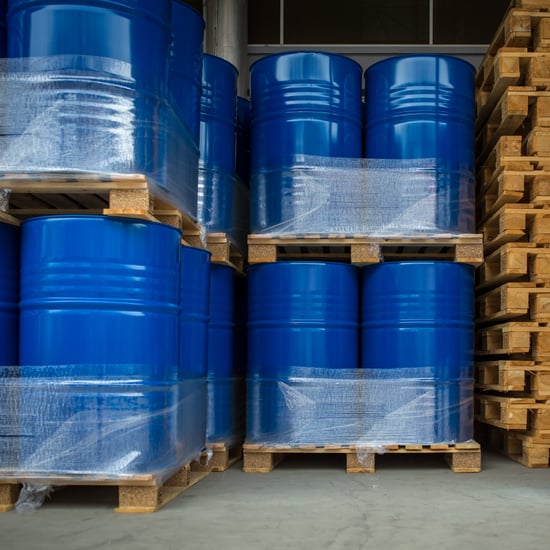
Somewhere in your facility right now, there is a drum. Maybe it is in the corner of a maintenance bay. Maybe it is on a pallet outside the lab, or staged near the loading dock behind a stack of empty totes. It has a lid, it has a label, and nobody is losing sleep over it. In all likelihood, it is entirely compliant today — with a lot of emphasis on "today".
That's because the question that separates well-run hazardous waste programs from the ones that get surprised is not whether that drum is currently compliant. It is whether anyone at the site can say with absolute certainty how many days are left on it until it is no longer compliant.
Hazardous waste compliance is often framed as a documentation problem. It’s really a timing problem. Nearly every serious violation, unplanned expense, and last-minute scramble in this space traces back to the same root cause: a clock started somewhere in the plant, and nobody was watching it.
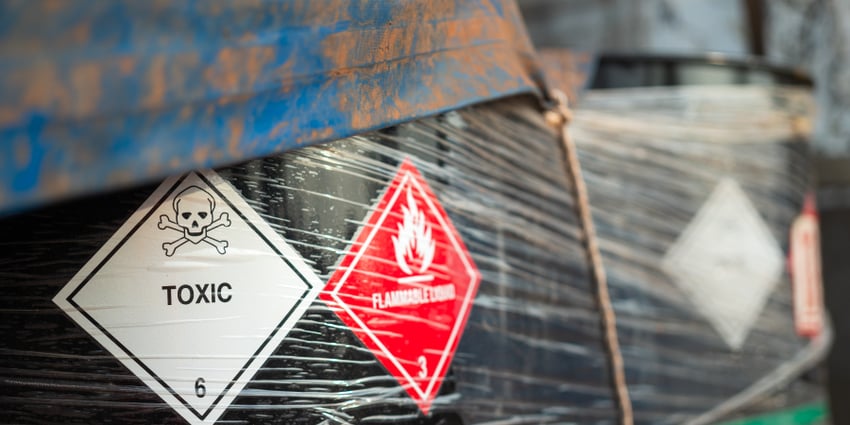
Hazardous Waste Generator Status: VSQG, SQG, and LQG Explained
The first misconception worth dismantling is that a facility “is” a particular kind of generator, the way it is a particular kind of plant.
Under the Resource Conservation and Recovery Act (RCRA), the U.S. Environmental Protection Agency sorts generators into three categories based on how much hazardous waste is generated in a calendar month — not per shipment, not per year, and not per contract. Per EPA's generator category guidance, a Very Small Quantity Generator (VSQG) produces 100 kilograms or less per month; a Small Quantity Generator (SQG) produces more than 100 but less than 1,000 kilograms per month; and a Large Quantity Generator (LQG) produces 1,000 kilograms (roughly 2,200 pounds) or more in any single month.
Acute hazardous waste operates on a far tighter scale: generating more than one kilogram in a month — about 2.2 pounds — is enough to place a site in the LQG category on its own.
Read those thresholds again with an operations mindset rather than a regulatory one.
Generator status behaves less like a license plate and more like a speedometer. It can move month to month, and it can move because of a single event that nobody logged as a compliance decision: a one-time tank cleanout, a batch of quarantined product, a discontinued raw material finally pulled off the shelf.
That is where most organizations get caught. They know their steady-state category. They do not have a process for noticing the month they left it.
The Three Accumulation Time Limits for Hazardous Waste
Category determines how long waste can legally sit on site without a storage permit. EPA's regulatory summary for generators lays the thresholds out plainly:
- LQG: 90 days of on-site accumulation, with no cap on quantity accumulated.
- SQG: 180 days — extended to 270 days if the waste must travel more than 200 miles for treatment or disposal — and no more than 6,000 kilograms on site at any time.
- VSQG: no accumulation time limit, but never more than 1,000 kilograms on site.
The consequence of blowing through an accumulation deadline is frequently underestimated. Under 40 CFR § 262.17, the 90-day allowance for an LQG is written as a condition for exemption from the permitting requirements that apply to treatment, storage, and disposal facilities. Miss the condition and the exemption does not simply lapse quietly — the accumulation area can be treated as unpermitted storage, which is a categorically different legal posture than a late shipment.
It is worth pausing on that distinction, because it explains why experienced regulators treat a single overdue drum as more than a housekeeping issue. The drum did not just sit too long. The exemption the facility was relying on stopped applying.
When Does the Hazardous Waste Accumulation Clock Actually Start?
Ask five people at a plant when a container's accumulation clock starts and you will often get five answers: when the drum is full, when it is moved to the storage pad, when the label is written, when the pickup is scheduled, or when someone remembers to date it.
Only one of those is the regulatory answer. In a central accumulation area, the clock starts when waste first enters the container — not when the container fills, and not when the label is completed after the fact. A drum that took six weeks to fill did not begin its 90 days on the day it was topped off.
Satellite accumulation areas (the small, at-the-point-of-generation collection points near the process itself) follow different timing logic until volume limits are exceeded and the container moves to central accumulation. EPA's frequently asked questions on the Generator Improvements Rule addresses satellite accumulation, episodic generation, and marking requirements in detail, and it is one of the more useful plain-language references available to an EHS team.
The practical takeaway is unglamorous but decisive: a retroactively written date is not a tracking system. It is a reconstruction, and reconstructions do not survive an inspection well.

Four Events that Change Your Hazardous Waste Generator Status
In our experience across industrial, chemical, and institutional sites, generator-status surprises almost never arrive gradually. They arrive attached to a specific business event that was planned for every reason except waste.
A New Process or Product Line
New chemistry produces new byproducts, and volumes are consistently underestimated at commissioning. A process that was modeled for throughput was rarely modeled for what comes out the other end.
A Turnaround, Shutdown, or Cleanout
Turnarounds surface years of deferred material in a matter of days: tank bottoms, spent catalyst, cleaning solvents, obsolete inventory. Waste is typically the last item planned and the first constraint encountered. A site that operates comfortably as an SQG all year can cross the LQG threshold in a single week of demolition and cleaning.
Expansion, Acquisition, or Consolidation
Adding a line, absorbing another company's site, or consolidating operations changes the monthly generation math immediately — often before anyone updates the EPA identification data or notifies the state agency.
Closing or Relocating a Site
When a facility ceases regulated operations, the runway to clear all regulated waste is short and fixed. Sites that treat decommissioning as a real-estate project rather than a waste project routinely discover this too late to plan around it.
There is relief available for some of these situations. The 2016 Hazardous Waste Generator Improvements Rule created an episodic generation provision that lets a generator manage a one-time, planned or unplanned event without permanently taking on a higher generator status — provided the episodic waste is managed correctly and the associated conditions are met. It is a genuinely useful flexibility. It is also one that must be used deliberately and on schedule, which means the facility has to recognize the episode as it begins, not after the fact.
Why Your Waste Profile Matters More Than the Manifest
A second widely held assumption is that once the truck leaves, the exposure leaves with it. Under RCRA's cradle-to-grave framework, the generator retains responsibility for the waste through final disposition. The transaction ends. The obligation does not.
Two documents carry that obligation, and they are not equally understood.
- The manifest tracks a shipment from origin to destination.
- The waste profile is the generator's characterization of what the material actually is. In a dispute, an audit, or a mischaracterization claim, the profile is typically the document that carries the weight — because it is the generator's own representation of the waste.
Tracking has also become considerably more transparent. The EPA launched its hazardous waste electronic manifest (e-Manifest) system in June 2018, and estimates the shift away from paper will ultimately cut 175,000 to 425,000 hours of administrative burden and save state and industry users more than $50 million annually once electronic adoption is widespread. In March 2026, EPA proposed phasing out paper manifests entirely in favor of a fully electronic system.
The strategic implication is not really about paperwork efficiency. It is about permanence and visibility. Manifest and profile records do not fade; they are retrievable years later and routinely surface during audits, transactions, and disputes. Compliance histories are also public: EPA's Enforcement and Compliance History Online (ECHO) database carries inspection, violation, and enforcement records for roughly 800,000 regulated facilities, searchable by anyone — a customer, an insurer, an acquirer, a journalist, or a neighbor.
RCRA Inspections, Reporting, and Enforcement: What to Expect
Facilities often treat inspections as random weather. They are closer to a schedule. In an April 2026 evaluation of RCRA state-level enforcement data, the EPA Office of Inspector General notes that EPA's standard inspection plan expects 20 percent of large quantity generators in each state and territory to be inspected annually — meaning every LQG nationwide should, in principle, be inspected once every five years. The report also observes that all 50 states and territories are authorized to inspect the LQGs within their borders, with EPA evaluating that performance on a five-year cycle.
Reporting follows a similarly fixed rhythm. Under EPA's Biennial Hazardous Waste Report requirements, large quantity generators must report the nature, quantity, and disposition of the hazardous waste they generate by March 1 of every even-numbered year, covering the prior year's activity. A facility that unknowingly crossed into LQG status in a single month of a reporting year may also have inherited a reporting obligation it never calendared.
Downstream resilience deserves a place in this conversation too. A November 2024 U.S. Government Accountability Office report found that more than 700 hazardous waste treatment, storage, and disposal facilities — about 68 percent of them — sit in areas exposed to flooding, wildfire, storm surge, or sea level rise. Where your waste goes, and how prepared that destination is, is a legitimate diligence question rather than a purely commercial one.
And none of this operates without people. OSHA's Hazardous Waste Operations and Emergency Response standard (29 CFR 1910.120) sets training and preparedness requirements for workers handling hazardous substances and responding to releases. Programs that treat training as a certificate to file rather than a capability to maintain tend to discover the gap during the one event that matters.

5 Ways to Stay Ahead of the Accumulation Clock
The facilities that manage this well are rarely the ones with the largest EHS staff. They are the ones that have converted a regulatory concept into an operating routine. Five practices show up repeatedly.
- Measure monthly, and write it down. Generator status is a calculation, not a memory. A simple monthly tally by waste stream — reconciled against manifests — turns an annual guess into a running number.
- Date at the first drop. Accumulation start dates should be captured when waste first enters a container, by the person who put it there. Every other approach is reconstruction.
- Put waste on the turnaround critical path. If waste characterization, profiling, and transportation are not in the shutdown schedule alongside scaffolding and contractor mobilization, they will become the constraint that extends the outage.
- Know your own lead times. Characterization testing and profile approval both take real time. A 90-day clock is not 90 days of runway if the analytical and approval cycle consumes several weeks of it. Facilities should know that number the way they know a maintenance lead time.
- Treat the profile as a legal document. Under-describing a waste stream — especially by omitting cleaners, solvents, or rinse water mixed into an otherwise recognizable material — is one of the most common causes of rejected loads, repricing, and downstream disputes.
Hazardous Waste Management Is an Uptime Problem, Not Just a Cost
Hazardous waste management gets discussed as a cost line. It behaves more like an uptime issue. A missed accumulation deadline does not just create a fine; it creates an unplanned shipment at an unplanned price, on a schedule someone else controls.
The organizations that do this well have stopped asking “who picks up our drums?” and started asking better questions: How much did we generate last month, and how do we know? Where does every clock in this building currently stand? What is our lead time from characterization to pickup, and does it fit inside our deadline? And when the turnaround comes, or the acquisition closes, or the line changes — who notices that the math has changed?
Those questions are answerable. They just have to be asked before the clock runs out rather than after.
More on Hazardous Waste Risks, Regulations, and Opportunities
Generator status and accumulation deadlines are the starting point, not the whole picture. The same operational discipline that keeps a drum from aging out also determines which materials end up incinerated, which get recovered, and how much regulatory risk a facility carries year to year. For a fuller treatment of how the regulations fit together — including where recycling and recovery pathways can change the calculus for common industrial waste streams — download our ebook, Hazardous Waste: Regulations, Risks, and Recycling Opportunities. It is a practical reference built for the people who own these decisions day to day, and a useful companion to the compliance clock this article walks through.
Want to go deeper on the hazardous waste details? Download our ebook →