


For businesses operating in regulated industries, compliance is the foundation of the right to operate.
Environmental compliance sits at the intersection of regulation, operations, and accountability. When environmental obligations are misunderstood, overlooked, improperly applied, or poorly managed, violations follow. Some are minor and easily corrected. Others carry financial penalties, operational disruptions, and lasting reputational harm.
The U.S. Environmental Protection Agency (EPA) establishes the regulatory framework designed to protect air, water, and land across the country. These federal regulations are adopted and enforced by state agencies, which means most businesses interact with the EPA indirectly through state permitting and oversight programs.
As Joseph Walsh, Sr. Director of Environmental at Reworld™, explains, environmental compliance is rarely about a single requirement or department. It is a system. “Understanding what your obligations are, communicating those obligations, assigning responsibility, and documenting what you’ve done are the pillars of a strong compliance program,” Walsh says. When any one of those pieces breaks down, the risk of violations increases.
What Is an EPA Violation?
An EPA violation occurs when a business fails to meet the environmental requirements established by federal regulations, state agencies, or local authorities acting under EPA authority. These requirements are typically laid out in permits, approvals, plans, or regulatory standards that govern how a facility operates, manages waste, handles emissions, or discharges water.
Most violations are not the result of intentional misconduct. They are often tied to missed deadlines, misunderstood permit language, incomplete records, or operational changes that were never reflected in existing approvals. In highly regulated industries, a single permit can contain dozens or even hundreds of individual conditions, each with its own reporting, monitoring, or documentation requirement.
EPA violations are usually identified through inspections, audits, or record reviews conducted by state environmental agencies. When a violation is found, regulators may issue a notice of violation, which outlines the alleged noncompliance and may require corrective actions, formal responses, or penalties. These notices often become part of the public record, making them visible to customers, investors, and community stakeholders.
Because states and localities implement EPA regulations differently, what qualifies as a violation in one jurisdiction may be treated differently in another. This variability adds complexity for businesses operating across multiple locations. Companies frequently operate in a gray area, where interpretation and agency expectations matter just as much as the written rule itself.
10 Most Common EPA Violations
EPA violations tend to follow familiar patterns across industries. While regulatory requirements vary by sector and state, enforcement data and inspection findings consistently point to the same categories of breakdowns. These violations are rarely the result of a single failure. More often, they stem from gaps in oversight, communication, or documentation that compound over time.
Here are 10 of the most common EPA-related violations businesses encounter.
1. Improper Hazardous Waste Storage, Labeling, or Disposal
Hazardous waste violations remain one of the most frequently cited issues under the Resource Conservation and Recovery Act. These violations often involve improper container labeling, incompatible waste storage, expired accumulation time limits, or disposal at facilities not permitted to accept certain waste streams.
Problems frequently emerge when waste classification is misunderstood or when operational changes introduce new waste streams without a corresponding update to waste handling procedures. Even well-intentioned facilities can fall out of compliance when temporary storage areas become permanent or when containers lack required markings, dates, or secondary containment.
2. Failure to Obtain or Maintain Required Environmental Permits
Environmental permits, such as National Pollutant Discharge Elimination System (NPDES) and Title IV permits, form the legal basis for facility operations, covering everything from air emissions and wastewater discharges to waste handling and stormwater management. Violations occur when businesses operate without required permits, allow permits to lapse, or fail to comply with permit conditions after approval.
Permit violations are often tied to growth, expansion, or operational changes. Adding new equipment, increasing production, or modifying processes can trigger new permitting requirements that are overlooked or misunderstood. In other cases, permits remain valid, but required monitoring, reporting, or renewal steps are missed.
3. Exceeding Air Emissions Limits or Violating Clean Air Act Requirements
Air quality violations arise when emissions exceed permitted limits or when facilities fail to follow Clean Air Act standards. These issues can include inadequate monitoring, malfunctioning control equipment, or incomplete emissions reporting.
In many cases, emissions violations are discovered during inspections or through required testing. Equipment changes, maintenance issues, or process variations can all affect emissions profiles, sometimes without immediate visibility to facility operators.
Additionally, when monitoring data is missing or inaccurate, regulators may treat the absence of data as a violation itself.
4. Unauthorized Discharges to Water or Stormwater Systems
Discharging pollutants into surface waters or stormwater systems without proper authorization is a common source of enforcement action under the Clean Water Act. Violations can involve unpermitted discharges, exceedances of discharge limits, or failure to implement required best management practices.
Stormwater violations are especially common because they often involve outdoor operations, material storage, or equipment maintenance areas. Rain events can quickly turn minor oversights into reportable incidents when pollutants migrate off site or enter drainage systems.

5. Inadequate Spill Prevention, Control, and Countermeasure (SPCC) Plans
Facilities that store certain quantities of oil or petroleum products are required to maintain spill prevention, control, and countermeasure (SPCC) plans. Violations occur when these plans are outdated, incomplete, or not implemented in practice.
SPCC issues frequently surface during inspections when secondary containment is missing, equipment is not properly maintained, or employees are unfamiliar with spill response procedures. Even when plans exist on paper, failure to align them with actual site conditions can lead to enforcement action.
6. Poor Recordkeeping and Missing Compliance Documentation
Accurate and complete recordkeeping is a cornerstone of environmental compliance. Violations arise when required records are missing, incomplete, or not retained for the required length of time.
Recordkeeping issues often accompany other violations. Sampling may be performed correctly, but documentation is misplaced or inconsistent. Training may occur, but attendance records are unavailable. In the absence of proof, regulators may treat compliance activities as if they never happened.
7. Failure to Submit Required EPA Reports on Time
Many environmental regulations require routine reporting, such as emissions inventories, discharge monitoring reports, hazardous waste biennial reports, or toxic release inventories. Late or missing submissions can result in violations even when underlying operations remain compliant.
Reporting failures are commonly linked to personnel changes, unclear ownership of compliance tasks, or reliance on manual tracking methods. When reporting calendars are not clearly defined or responsibilities are spread across teams, deadlines can be missed without immediate visibility.
Over time, repeated late filings may signal broader compliance weaknesses to regulators and can trigger increased inspections or follow-up inquiries.
8. Improper Handling or Storage of Chemicals and Regulated Substances
Chemical handling violations involve improper storage, inadequate labeling, incompatible materials, or failure to follow safety data sheet requirements. These issues can pose environmental, health, and safety risks when chemicals are stored or handled incorrectly.
Violations in this category often occur when chemical inventories grow or change without corresponding updates to storage layouts, containment measures, or internal procedures. Facilities may also struggle when similar substances fall under different regulatory classifications, leading to unintentional noncompliance.
9. Violations Related to Underground or Aboveground Storage Tanks
Storage tank regulations govern installation, monitoring, leak detection, and maintenance of underground and aboveground tanks. Violations can include failure to conduct required inspections, incomplete leak detection records, corrosion control deficiencies, or improper tank closures.
Tank-related violations may go unnoticed for extended periods, particularly when systems rely on automated monitoring that is not regularly reviewed. Aging infrastructure, staff turnover, or inconsistent documentation practices can all contribute to compliance gaps in this area.
10. Failure to Train Employees on Environmental Compliance Requirements
Employee training plays a critical role in maintaining compliance across day-to-day operations. Violations occur when staff members lack awareness of permit conditions, spill response procedures, waste handling requirements, reporting obligations, or state-level training requirements relevant to their roles.
Training gaps are especially common in organizations with high turnover, multiple shifts, or decentralized operations. Without consistent onboarding, refresher training, and role-specific instruction, even well-designed compliance systems can break down at the operational level, increasing the likelihood of repeat violations.

How to Avoid EPA Violations
Avoiding EPA violations requires more than reacting to inspection findings or regulatory notices. Strong compliance programs are proactive by design, built around clear accountability, routine oversight, and a practical understanding of how regulations apply to daily operations.
While no program can eliminate risk entirely, the following steps outline proven practices used by organizations that maintain consistent compliance across facilities and jurisdictions.
Conduct Regular Environmental Compliance Audits
Regular environmental compliance audits help organizations identify gaps before regulators do. These reviews can range from focused facility walkthroughs to comprehensive multimedia audits covering air, water, waste, and chemical management, often guided by an environmental compliance audit checklist to ensure nothing is overlooked.
Internal audits also create an opportunity to validate that permit conditions are being met in practice, not just on paper. On-site reviews are particularly valuable because they reveal how procedures translate into real-world operations and help build trust between environmental teams and facility staff.
Maintain Accurate and Up-to-Date Permits and Records
Permits and compliance records serve as the backbone of any environmental program. Keeping them current requires tracking expiration dates, understanding permit conditions, and documenting required activities consistently.
Organizations that centralize permit management and maintain clear documentation systems are better positioned to demonstrate compliance during inspections. Additionally, accurate records provide continuity when personnel change or responsibilities shift.
Implement a Formal Environmental Management Program
A structured environmental management program provides clarity around roles, responsibilities, and expectations, including defining who owns specific compliance tasks, how activities are tracked, and how issues are escalated when they arise.
Walsh emphasizes the importance of assigning responsibility and following through. “It’s not enough to have a permit. Someone must be responsible for meeting each condition, and that work has to be documented,” he explains.
Train Employees on EPA Regulations and Site-Specific Procedures
Effective compliance depends on employee awareness. Training should align with job functions and focus on the environmental requirements employees interact with directly, such as waste handling, spill response, or equipment operation.
Training programs are most effective when they are repeated regularly and updated as site conditions or regulations change. This approach helps reinforce expectations and reduces the risk of procedural drift over time.

Inspect Equipment, Storage Areas, and Controls Routinely
Routine inspections help catch issues before they escalate into violations. They may include checking storage areas, secondary containment (i.e., extra storage safety measures for hazardous materials), monitoring equipment, and pollution control systems for signs of wear, damage, or nonconformance.
Inspection findings should be documented and tracked through to resolution. Consistent follow-up helps prevent small maintenance issues from turning into regulatory findings.
Monitor Emissions, Discharges, and Waste Streams Continuously
Monitoring activities provide insight into how operations perform relative to regulatory limits. This may involve sampling, testing, or reviewing operational data tied to air emissions, wastewater discharges, or waste generation.
When monitoring results are reviewed regularly, organizations can spot trends, investigate anomalies, and address issues early. Data also plays a critical role in supporting accurate regulatory reporting.
Address Compliance Issues Promptly with Corrective Actions
When compliance issues are identified, timely corrective action matters. Delays can increase regulatory risk and signal weak internal controls.
Walsh notes that addressing findings collaboratively helps drive better outcomes. “You don’t want people to perceive that you’re out to catch them doing something wrong,” he says. “You want to work with them to identify concerns and help them get into compliance.” Taking this approach also helps reinforce accountability at the facility level while keeping compliance efforts focused on long-term improvement rather than short-term fixes.
Stay Informed on Changing EPA Regulations
Environmental regulations evolve, and changes at the federal level can trigger different responses from state agencies. Staying informed requires monitoring regulatory updates, guidance documents, and enforcement trends.
For organizations operating in multiple states, this challenge is compounded by differences in interpretation and implementation. Dedicated tracking tools and external resources can help teams stay current and responsive.
Work with Qualified Environmental Compliance Experts
External expertise plays an important role in many compliance programs. Environmental consultants, engineers, and legal advisors can provide insight into regulatory interpretation, permitting requirements, and local expectations.
Walsh points out that local knowledge often makes a meaningful difference. “States and municipalities interpret regulations differently, and having people who understand those nuances can help organizations navigate compliance more effectively,” he says.
EPA Violations, Fines, and Penalties: FAQ
What Is Considered an EPA Violation?
An EPA violation occurs when a facility fails to comply with environmental laws, regulations, permits, or approvals issued under federal or state authority. It can include missed reporting deadlines, operating without a permit, exceeding emission or discharge limits, improper waste handling, or inadequate documentation.
What Happens If You Violate EPA Rules?
When a violation is identified, regulators may issue a notice of violation and require corrective actions. Depending on the severity, the response may include follow-up inspections, formal enforcement actions, penalties, or negotiated compliance agreements.
What Is an EPA Notice of Violation?
A notice of violation is a formal communication from a regulatory agency stating that a facility is alleged to be out of compliance. It typically outlines the specific requirements at issue and may request documentation, corrective action plans, or written responses.
How Does the EPA Investigate?
Investigations may involve inspections, record reviews, sampling, audits, or interviews conducted by state agencies acting under EPA authority. These activities can be scheduled in advance or unannounced, depending on the regulatory program and circumstances.
Can the EPA Come on Your Property?
Yes, regulatory agencies like the EPA generally have the authority to enter permitted facilities to conduct inspections, subject to applicable laws and notice requirements. The scope and frequency of visits vary by state and regulatory program.
Are EPA Violations Public Record?
In many cases, EPA violations and enforcement actions are part of the public record. Notices of violation, inspection findings, and compliance histories may be accessible through public databases or regulatory agency websites.
Can the EPA Shut Down a Business?
In serious cases involving significant environmental harm or repeated noncompliance, regulators may seek to suspend operations until issues are addressed. While shutdowns are not common, they remain a possibility when violations pose ongoing risks.
Can the EPA Fine You?
Yes, civil penalties may be assessed for violations of environmental regulations. Fines are often based on the nature of the violation, its duration, and any resulting environmental impact.
How Much Is an EPA Fine?
EPA fines vary widely depending on the statute, severity, and circumstances involved. Penalties can range from thousands of dollars for minor violations to much larger amounts for significant or ongoing noncompliance.
What Is the Largest Fine for the EPA?
The largest EPA fines have reached into the hundreds of millions or even billions of dollars in cases involving major environmental incidents, long-term violations, or widespread impacts.
How Can Reworld™ Help Businesses Avoid EPA Violations?
Reworld™ works with businesses to help them understand how environmental regulations apply to their waste streams and operations. By providing guidance on proper waste management, disposal options, and regulatory considerations, we help customers navigate compliance landscapes more effectively.
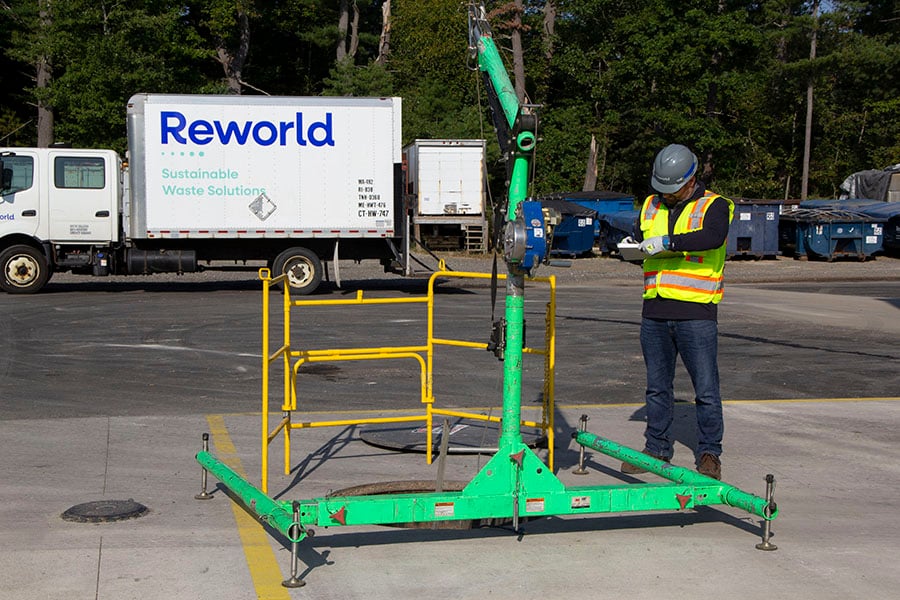
Contact Reworld™ Today for Help with Environmental Compliance
Environmental compliance is complex, especially for organizations operating across multiple facilities or jurisdictions. As a result, many EPA violations stem from missed details, unclear ownership, outdated permits, or breakdowns between policy and day-to-day operations. By understanding common violations, recognizing how enforcement works, and investing in proactive compliance practices, businesses can reduce risk while protecting their operations, reputation, and communities.
At Reworld™, we work closely with businesses to help them navigate the realities of environmental compliance as it relates to waste management and regulatory responsibility. Our team brings deep industry knowledge and real-world experience to help customers understand how regulations apply to their waste streams, identify compliant disposal options, and adapt as requirements change.
If you are looking for a knowledgeable partner to support your environmental compliance efforts and responsible waste solutions, we are here to help. Contact us today to start a conversation about how our expertise can support your compliance goals.