


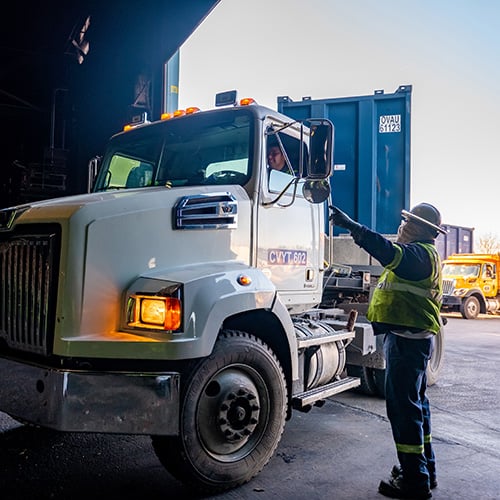
Every waste stream leaves a footprint. Once a material is no longer reusable or recyclable, the next question is what kind of impact it will have and how that impact can be reduced.
That is where waste-to-energy (WTE) enters the conversation.
Waste-to-energy refers to proven technologies that convert nonrecyclable waste into useful energy, typically electricity, steam, or heat. It does not replace efforts to reduce, reuse, and recycle. Instead, it supports these priorities by managing the remaining materials that cannot be recovered through higher-value options.
For municipalities and businesses across consumer goods, food and beverage, pharmaceuticals, and many other manufacturing and industrial service sectors, the appeal is obvious. WTE can reduce dependence on landfills, recover value from residual waste, and support broader sustainability goals. At the same time, it’s not a perfect solution. WTE facilities are expensive to build, highly regulated, operationally demanding, and still subject to public debate, particularly in the United States.
In this article, we take a closer look at the pros and cons of waste-to-energy, how sustainable WTE really is, and where Reworld® fits into a smarter, more circular approach to waste management.
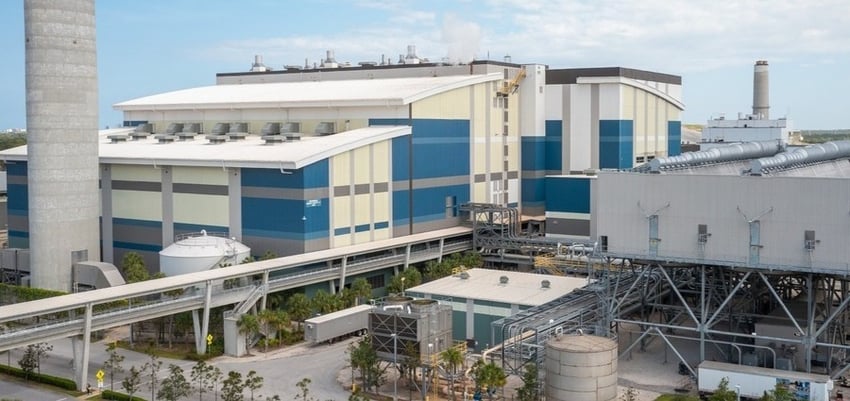
Pros of Waste-to-Energy
Waste-to-energy offers a set of practical and environmental advantages when it is used for the right materials and integrated into a broader waste strategy. Its value is strongest when it manages post-recycled, nonrecyclable waste that would otherwise be buried in a landfill.
Reduces Landfill Waste
One of the most widely recognized benefits of WTE is that it significantly cuts the amount of waste sent to landfills. Instead of burying residual materials, a waste-to-energy facility processes them and reduces their mass and volume dramatically, which makes a significant difference for communities facing shrinking landfill capacity, rising disposal costs, and long-term land use constraints.
Landfills take up space, require ongoing management, and remain an environmental liability long after they stop accepting waste. By diverting residual waste away from disposal, WTE can extend landfill life and reduce the need for new landfill development.
Generates Renewable Energy
Thermomechanical treatment facilities (TTFs) use WTE technology to convert residual waste into useful electricity, steam, and heat. In many systems, that energy is supplied to the local grid or used in industrial operations. In other words, WTE has a dual function: It manages waste while also producing dependable energy from a material stream that already exists.
But remember that not every part of the waste stream is renewable. Some of the energy comes from biogenic materials such as paper, food waste, wood, and yard debris. Other portions come from fossil-based materials such as certain plastics. That’s one reason WTE is often debated in energy policy circles.
Still, for organizations trying to recover value from waste that cannot be recycled, WTE offers a practical form of energy recovery that can reduce dependence on landfilling and offset some conventional energy demand.
Reduces Greenhouse Gas Emissions
A major sustainability argument in favor of waste-to-energy is that it can cut greenhouse gas emissions when compared with landfilling residual waste.
Why? Because landfills generate methane as organic materials decompose, and methane is a much more powerful greenhouse gas than carbon dioxide over the short term. WTE does release carbon dioxide during combustion, so it’s not carbon free. But when residual waste is diverted from landfills, the avoided methane emissions can materially shift the climate equation.
Michael Van Brunt, Vice President of Environmental and Sustainability at Reworld®, puts it this way: “For every ton of waste that we can divert from a landfill, we’re actually saving about 2.4 tons of CO2 equivalents.”
Improves Resource Recovery
TTFs that employ waste-to-energy are not only about combustion and energy generation but also about supporting material recovery.
After combustion, metals can be extracted from the remaining ash and returned to the recycling stream. Ferrous metals such as steel can be recovered with magnets, while nonferrous metals such as aluminum, copper, brass, and bronze can be separated using eddy current technology. That means TTFs using WTE technology can capture value that might otherwise be buried. It also helps reduce demand for virgin raw materials, which carries its own environmental benefit.
Reduces Environmental Contamination
Landfills are engineered systems, but they still carry long-term contamination risks. Over time, buried waste can generate leachate and landfill gas, creating ongoing management demands and potential risks for soil and groundwater if systems fail or degrade.
Waste-to-energy shifts residual waste management away from long-term burial. Rather than storing waste indefinitely, WTE treats the material in a controlled thermomechanical treatment facility with engineered combustion and emissions controls. That approach reduces the volume of buried material and can lower the potential for long-term contamination associated with landfill disposal.
Supports Energy Security
Waste-to-energy can also support local energy resilience. Unlike some energy resources that depend on weather conditions, TTFs using WTE technology can provide a steady output as long as a consistent waste stream is available, which makes them useful as part of a diversified local energy mix, especially for regions looking to build more resilient infrastructure and reduce reliance on distant fuel sources.
For industrial users, steam or electricity from waste-to-energy technology can also support operational continuity. In some cases, TTFs become a direct energy partner to local manufacturing operations.
Reduces Waste Transportation Needs
Transporting waste over long distances adds cost, congestion, and emissions. When waste can be processed closer to where it is generated, those burdens can drop.
Infrastructure footprint makes a big difference here. A regional network of facilities and transfer capabilities can reduce the need to send large volumes of residual waste to faraway landfills. For commercial and industrial waste generators, that can translate into more efficient logistics and a more regionalized waste strategy.
Promotes Circular Economy Practices
Waste-to-energy plays an important role in a circular economy. Van Brunt says, “Every time you turn that crank of the circular economy, you have to put energy back into the system, and using waste that can’t otherwise be recycled is a great way to power that.”
A circular economy doesn’t mean every material gets endlessly recycled. In the real world, some materials are too contaminated, too degraded, too mixed, or too complex to recycle effectively. WTE provides a way to recover value from that residual fraction instead of treating it as worthless.
Provides Economic Opportunities
WTE infrastructure supports economic activity on several fronts. Facilities require skilled labor for design, engineering, operations, maintenance, environmental monitoring, transportation, and metals recovery. They can also create indirect value by supplying energy, supporting industrial users, and reducing pressure on landfill capacity.
However, WTE projects aren’t automatically cost-effective. Economics depend on local disposal costs, regulation, infrastructure, and energy markets. Still, in many settings, TTFs and WTE can be part of a regional sustainability and economic development strategy.
Cons of Waste-to-Energy
A balanced view of waste-to-energy has to address the tradeoffs. WTE can be valuable, but it is not a simple, universal answer. It comes with technical, financial, environmental, and social challenges that decision makers need to weigh carefully.
High Capital Costs
Facilities that use waste-to-energy technology are expensive to build. They require major upfront investment in plant construction, combustion systems, energy recovery equipment, emissions control systems, and ongoing maintenance. This high capital barrier is one reason WTE has not scaled more broadly in the United States.
For municipalities and private operators, the financial case depends on long-term feedstock availability, disposal economics, regulatory stability, and energy revenue.
Air Pollution Concerns
Air emissions are one of the most common concerns associated with waste-to-energy, and they should be taken seriously.
Poorly managed combustion can create significant pollution problems. Modern TTFs, however, are built around sophisticated air pollution control systems, continuous monitoring, and strict operating requirements. That does not eliminate public concern, but it does change the conversation from uncontrolled burning to tightly regulated industrial combustion.
A credible discussion must hold both ideas at once. Yes, air pollution concerns are real. And yes, modern systems are designed specifically to control them.
Not Fully Carbon-Free
WTE can reduce greenhouse gas emissions relative to landfill disposal, but it is not a zero emissions technology. Combustion produces carbon dioxide. Part of that comes from biogenic materials, and part of it may come from fossil-based materials in the waste stream. That’s why it’s more accurate to describe WTE as a lower-impact option for residual waste when compared with landfilling, especially in a life cycle framework, as opposed to a perfect climate solution.
Waste Sorting Requirements
WTE depends on good sorting, strong waste screening, and disciplined operational controls, and it works best when the incoming waste stream is managed intelligently. It is not an excuse to throw everything together and hope for the best.
Recyclables and compostables should be removed upstream whenever possible. Certain prohibited or problematic materials also need to stay out of the system. If the feedstock is too wet, too contaminated, or too inconsistent, facility performance can suffer.
Can Discourage Recycling
If a community builds its waste strategy around feeding a WTE plant rather than maximizing reduction, reuse, recycling, and composting, then the system can drift in the wrong direction.
The right model is not recycling vs. WTE. It is recycling first, then waste-to-energy for the remaining fraction that cannot be practically recovered. When used that way, as in most communities that host TTFs, WTE complements recycling instead of competing with it.
Public Acceptance Obstacles
Large industrial infrastructure projects often trigger local opposition, especially when they involve waste handling, combustion, truck traffic, or visible stacks. Public skepticism can be intensified by outdated perceptions of incineration or by a lack of trust in operators and regulators.
Transparency is important. Communities want clear answers about what’s coming in, how the process works, what controls are in place, and how performance is monitored.
Ash Disposal Challenges
WTE reduces the amount of waste that needs disposal, but it does not eliminate disposal altogether.
Combustion leaves ash behind, and that ash must be handled carefully. Some materials can be recovered from it, including metals, but residual ash still requires regulated management and disposal. Depending on its composition, it may also need additional oversight and testing. So, while WTE sharply cuts landfill demand, it does not make landfill needs disappear.
Operational Complexity
A thermomechanical treatment facility employing WTE technology is a complex industrial operation with interdependent systems for waste handling, combustion control, heat recovery, emissions management, ash handling, monitoring, and compliance. That complexity raises the bar for staffing and operations. Skilled operators, strong maintenance programs, and rigorous environmental management are required. If those pieces are weak, performance can suffer.
Energy Conversion Efficiency Limits
Waste-to-energy produces valuable energy, but it’s not always the most efficient form of power generation when compared on a narrow electricity basis to some other technologies.
Its role is different. WTE is solving two problems at once by managing residual waste and recovering energy. That dual purpose gives it value, but it also means it should not be compared too casually with wind, solar, or other energy technologies that are not managing a waste stream at the same time.
Advantages and Disadvantages of Waste-to-Energy: FAQs
Is Waste-to-Energy Sustainable?
Waste-to-energy can be sustainable when it is used for residual waste that cannot be reduced, reused, recycled, or composted economically and safely, as it’s more sustainable than landfilling that same material. Sustainability depends on facility design, emissions controls, waste screening, metals recovery, and how well it fits into a broader materials management strategy.
What Are the Advantages of Waste-to-Energy?
The main advantages of thermomechanical treatment facilities and waste-to-energy include landfill diversion, reduced methane emissions compared with landfilling, energy recovery, metals recovery from ash, lower long-term land use pressure, and support for a more circular waste system. They can also help businesses and communities manage post-recycled materials more productively.
What Are the Disadvantages of Waste-to-Energy?
The biggest disadvantages of waste-to-energy are high capital costs, public acceptance challenges, emissions concerns if systems are poorly managed, ash-handling requirements, operational complexity, and the risk that bad policy design could let WTE compete with recycling instead of supporting it.
How Does Waste-to-Energy Reduce Landfill Waste?
WTE processes residual waste in a controlled thermomechanical treatment facility instead of burying it in a landfill. This process dramatically reduces the volume of material that must be disposed of and leaves behind a much smaller ash residue, which can still yield recoverable metals.
Is Waste-to-Energy Considered a Renewable Energy Source?
The answer is nuanced. The biogenic portion of municipal solid waste, such as paper, food, wood, and yard materials, is treated as renewable in some policy and accounting frameworks. The fossil-based portion of the waste stream is different. From a replenishment perspective, waste-to-energy does meet the “renewable” standard due to society’s perpetual (and for now, unavoidable) production of waste.
Can Waste-to-Energy Coexist with Recycling Programs?
Yes, and it should. A strong waste system prioritizes reduction, reuse, recycling, and composting first. Waste-to-energy then handles the materials left over after those efforts. When designed properly, the two approaches work together rather than compete. In fact, most communities that host facilities using WTE technology also have higher-than-average recycling rates.
What Are the Main Environmental Concerns with Waste-to-Energy?
The main environmental concerns of waste-to-energy are air emissions, carbon dioxide from combustion, ash management, and the possibility of poor outcomes if a facility is badly operated or placed into a system that underinvests in recycling. These are real issues, which is why modern WTE depends on strict regulation, monitoring, and disciplined operations.
How Can Reworld® Help with Waste-to-Energy?
Reworld® helps businesses and communities manage waste through renewable energy recovery solutions, combining thermomechanical treatment facilities employing WTE with a broader network that reduces reliance on landfill disposal while recovering value from residual waste. Our approach supports zero waste-to-landfill and greenhouse gas reduction goals while also strengthening overall materials management through reverse logistics, waste processing, and recovery capabilities that go beyond a single disposal solution.
Contact Reworld® Today for Waste-to-Energy Solutions
Waste-to-energy is not a silver bullet, and anyone selling it that way is oversimplifying the issue. The smarter view is this: For residual waste that cannot be practically recycled or reused, WTE is a meaningful step up from landfilling.
Is your organization looking for more sustainable ways to manage waste? We can help. Explore our waste-to-energy solutions and contact us to talk about how we can support your waste diversion, recovery, and sustainability goals.